How Flexible Workspaces Are Redefining Productivity for Cape Town Businesses (2026 Guide)
Cape Town’s commercial property market has shifted dramatically over the past five years. Where long-term leases and fixed office footprints were once the default for corporate tenants, forward-thinking businesses are increasingly choosing flexibility, and seeing measurable results in productivity, talent retention, and bottom-line performance. Whether you’re a growing enterprise looking to establish a presence in the CBD, an established corporate restructuring your real estate strategy, or a company expanding into Cape Town from Johannesburg or abroad, the way you think about office space is one of the most consequential decisions you’ll make in 2026.
This guide explores how flexible workspaces, serviced offices, coworking environments, and hybrid office arrangements, are reshaping the way Cape Town’s corporate sector operates, and why more businesses are making the switch.
What “Flexible Workspace” Actually Means for Corporate Tenants
The term flexible workspace covers a broad spectrum, and for corporate clients the distinctions matter. At one end, you have hot-desking arrangements — shared, unassigned seating suited to small teams or individuals who need occasional professional space away from home. At the other end, fully serviced private offices offer a dedicated, branded environment with all the infrastructure of a traditional office, none of the capital outlay, and a lease term that can be as short as a month.
In between, managed offices and coworking memberships offer varying degrees of privacy, permanence, and customisation. For corporate enterprises specifically, the most relevant options are typically private serviced offices and managed suites, spaces that can accommodate a full team, carry a professional address, and be configured to reflect the company’s brand and culture. Cape Town’s business districts, from the V&A Waterfront to Century City and the CBD, now offer a strong range of these options at competitive rates compared to Johannesburg or international markets.
Understanding which tier of flexibility suits your business requires an honest assessment of three things: how often your team is actually in the office, how much dedicated space you genuinely need day-to-day, and how much your space requirements are likely to change over the next 12 to 24 months.
The Productivity Case for Flexible Workspaces
The relationship between workspace design and employee output is well established in organisational research, but the conversation has matured beyond simply asking whether open-plan or private offices are better. Today, the most productive environments are those that offer choice — and flexible workspaces are built around exactly that principle.
When employees can select their work setting based on the task at hand, output improves. A senior analyst working through a complex financial model needs a different environment to a creative team brainstorming a campaign. Flexible workspaces accommodate both within the same building, often within the same floor. Private focus rooms, collaborative zones, and quiet lounges can all coexist in a well-designed serviced office environment, giving employees the autonomy to work in the way that suits them best.
For Cape Town corporate tenants, there is an additional productivity consideration that is easy to overlook: commute friction. Cape Town’s traffic, particularly on routes into the CBD from the Northern Suburbs, Constantia, and the Southern Peninsula, is a genuine drain on employee energy and time. Companies that offer workspace access closer to where their teams live, or that allow employees to rotate between multiple workspace locations, report measurable improvements in punctuality, energy levels, and overall job satisfaction. Flexible workspace providers in Cape Town increasingly offer multi-location memberships that make this possible without requiring a company to manage multiple leases.
How Flexible Workspaces Support Enterprise-Level Operations
Scepticism about flexible workspaces among corporate decision-makers often centres on professionalism — the concern that a shared or serviced environment will not convey the right image to clients, partners, or prospective hires. In Cape Town’s market, this concern is increasingly outdated. The city’s premium flexible workspace operators have invested heavily in reception services, meeting room facilities, video conferencing infrastructure, and building-grade security, precisely because they are targeting corporate tenants rather than freelancers.
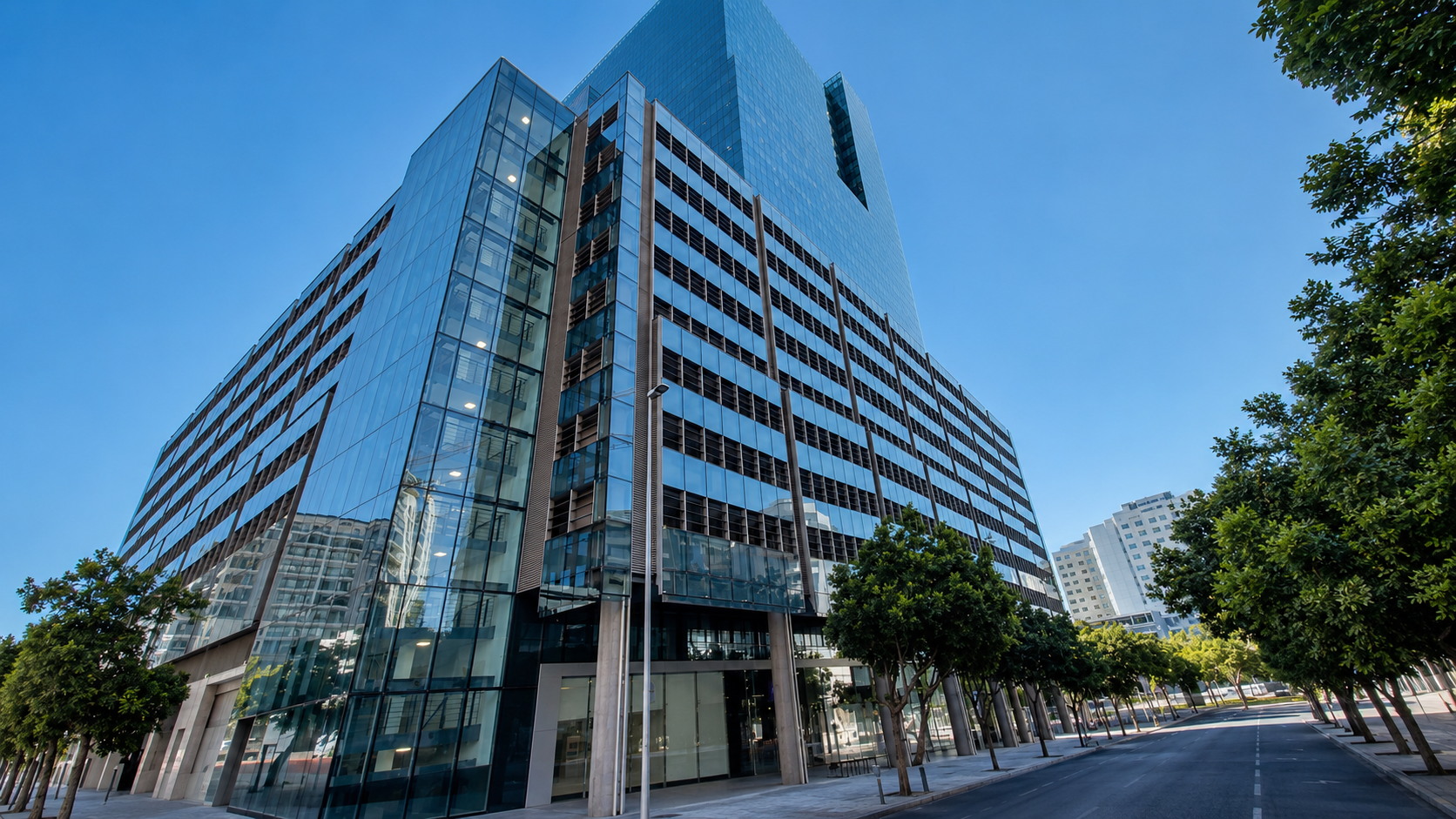
A well-chosen serviced office in Cape Town’s CBD or Century City provides a prestigious business address, a staffed reception, access to boardrooms equipped for executive-level meetings, and IT infrastructure that meets enterprise security requirements. For companies that need to host clients, pitch to investors, or interview senior candidates, the environment is indistinguishable from a conventional corporate office — with the added advantage that the operational burden of managing that environment falls on the workspace provider, not on your team.
This operational relief is significant. Facilities management, cleaning, IT maintenance, office supplies, and utilities are typically bundled into a single monthly fee in a serviced office arrangement. For finance directors and operations managers, this consolidation simplifies budgeting considerably and removes a category of unpredictable cost that traditional leases inevitably produce.
Why Cape Town Corporates Are Rethinking Long-Term Leases
Commercial leases in Cape Town’s prime nodes, the Foreshore, V&A Waterfront, and Century City, carry significant financial commitments. Fit-out costs, deposit requirements, escalation clauses, and the operational costs of maintaining a space can make a traditional lease a substantial and inflexible liability, particularly in an economic environment where headcount and business conditions can change quickly.
Flexible workspaces reframe this equation. Instead of committing capital to a fit-out and signing a multi-year lease based on projected headcount, corporate tenants pay for the space they actually use, with the ability to scale up or down as conditions change. For a business that is growing, this means not being constrained by a lease signed when the company was smaller. For a business navigating a restructure or a shift to hybrid working, it means not paying for empty desks while still maintaining a professional address and team base.
The South African economic environment in 2026 adds further weight to this argument. With interest rates, electricity costs, and operational expenses all under pressure, preserving capital and maintaining financial agility is a strategic priority for most corporate finance teams. A flexible workspace arrangement converts a fixed property liability into a variable operating expense — one that can be adjusted in response to business performance rather than locked in regardless of it.
Employee Satisfaction and Talent Retention in a Competitive Market
Cape Town has become one of South Africa’s most competitive markets for skilled talent, particularly in financial services, technology, and professional services. The workspace a company provides is no longer purely a functional consideratio, it is a talent acquisition and retention tool, and employees at all levels are aware of it.
Flexible workspaces tend to score well on the environmental factors that matter most to professional employees: natural light, modern design, quality amenities, and a sense of community. Cape Town’s best serviced office environments are thoughtfully designed spaces that employees genuinely want to come to, rather than spaces they tolerate because they have to. This distinction matters more than many employers appreciate. In an era where hybrid work has given employees real leverage over where and how they work, the quality of the office environment is a factor in whether talented people choose to stay.
Beyond aesthetics, flexible workspaces often provide access to wellness facilities, professionally catered kitchens, networking events, and professional development programmes — resources that smaller corporate tenants would struggle to provide independently. For employees, these amenities signal that their employer values their experience at work. For employers, they represent a meaningful benefit that costs far less than providing the same resources in a standalone office.
Choosing the Right Flexible Workspace in Cape Town
Not all flexible workspaces are created equal, and for corporate tenants the selection process deserves serious due diligence. Location is the obvious starting point — proximity to clients, transport links, and the areas where your team lives will all influence how well the space works in practice. Cape Town’s major business nodes each have distinct characteristics: the CBD offers central access and a dynamic urban environment, Century City provides modern infrastructure with easier parking, and the V&A Waterfront combines prestige with a quality-of-life setting that many corporates find attractive for client-facing operations.
Beyond location, assess the quality and availability of meeting rooms, the reliability of IT infrastructure, the professionalism of reception and support staff, and the terms of the agreement. Flexibility in the contract itself is as important as flexibility in the space, look for transparent pricing, clear terms around scaling up or down, and a provider with a track record of serving corporate clients rather than one primarily oriented towards startups or freelancers.
It is also worth considering the community and neighbours within the workspace. For some corporate tenants, the cross-industry networking that comes naturally in a shared environment is a genuine business benefit. For others, confidentiality and separation from competitors is a priority, in which case a fully private managed suite is the appropriate choice.
Frequently Asked Questions About Flexible Workspaces in Cape Town
What is the difference between a serviced office and a coworking space in Cape Town?
A serviced office provides a private, dedicated workspace for your company, your own lockable office or suite, with access to shared amenities like reception, meeting rooms, and kitchens. A coworking space is a shared environment where individuals and teams from different companies work alongside each other in an open-plan setting. For corporate tenants who need privacy, confidentiality, and a dedicated team base, a serviced office is typically the more appropriate choice.
How much does a serviced office cost in Cape Town compared to a traditional lease?
The all-inclusive monthly cost of a serviced office in Cape Town varies depending on location, size, and provider, but corporate tenants typically find that when fit-out costs, deposits, utilities, facilities management, and operational overhead are factored into a traditional lease, the total cost of occupancy is comparable — and often higher — than a quality serviced office arrangement. The key financial advantage of a serviced office is cost predictability and the elimination of capital expenditure.
Can a large corporate team use a flexible workspace in Cape Town?
Yes. Cape Town’s leading flexible workspace providers offer private suites and managed floors capable of accommodating teams of 20 to 100 or more. Many providers will also customise the space to reflect your company’s branding and culture, making it indistinguishable from a conventional corporate office to visiting clients and partners.
How quickly can a company move into a serviced office in Cape Town?
One of the most significant advantages of a serviced office is speed of occupancy. Because the space is already fitted out and fully equipped, most corporate tenants can be operational within days of signing an agreement — compared to months for a conventional lease fit-out. This makes serviced offices particularly valuable for companies establishing a new Cape Town presence, managing an urgent relocation, or opening a project office for a fixed-term engagement.
Are flexible workspaces suitable for client-facing corporate operations?
Yes, provided you select the right environment. Cape Town’s premium serviced office providers offer professional reception services, executive boardrooms, video conferencing facilities, and prestigious business addresses that are entirely appropriate for client-facing operations. The key is choosing a provider and location that aligns with the standard your clients expect.
The Strategic Shift Has Already Happened: Is Your Business Keeping Up?
The move towards flexible workspaces in Cape Town is not a passing trend driven by the pandemic or by startup culture. It is a structural shift in how corporate real estate is being consumed — one driven by financial pragmatism, talent expectations, and the recognition that a fixed office footprint is a constraint, not an asset, in a business environment that demands adaptability.
For corporate decision-makers evaluating their workspace strategy in 2026, the question is no longer whether flexible workspaces are a viable option. It is whether your current arrangement is serving your business as well as a flexible alternative could.
Office Rental connects Cape Town businesses with premium flexible workspace options across the city’s major business nodes. Whether you need a private serviced office for a growing team, a prestigious address for a new Cape Town operation, or a managed suite that reflects your corporate brand, we can help you find the right fit without the complexity of a traditional lease.
Get in touch with Office Rental today to discuss your requirements and arrange a viewing of available spaces.
Published 2026 | Office Rental — Cape Town’s Flexible Workspace Specialists